Ecommerce SEO Agency in Dubai
GoupSEO is an ecommerce SEO agency in Dubai for stores that sell against Amazon.ae and noon. Our ecommerce SEO services fix categories, product data and filters, so you rank in Google and get named when shoppers ask ChatGPT, Claude, Perplexity or Google AI Overviews what to buy.
Google-Certified SEO Consultant · 7+ years
No lock-in contracts · Work directly with the founder · Response within 24 hours
Key takeaways
- Category pages are where a UAE store has the best chance against a marketplace. Single model numbers are much harder to win.
- Filter URLs can multiply faster than your catalogue grows, and crawlers spend time on them instead of your new stock.
- AI answers draw on more than your site. Review sites, gift guides and forums shape whether your store gets named.
- Nobody can guarantee a citation in an AI answer. We track how often you are named for a fixed set of shopper prompts and report the change.
- Our closest verified result is a Dubai jewellery retailer that grew organic traffic 93% in six months. Its conversions were enquiries, not checkout orders.
What are ecommerce SEO services, and what do they fix?
Ecommerce SEO services make an online store's categories and products easy for search engines and AI assistants to find, trust and recommend. The work covers site structure, product data, filter and crawl rules, page speed, buying guidance and links, and it is judged by orders and revenue from organic search.
Why a Dubai store needs its own plan
Four things about shopping here change the order of the work.
Marketplaces hold the obvious searches
Amazon.ae and noon carry enormous ranges, so a head-on fight for a popular model rarely pays. We look for ranges they present poorly: fit and sizing advice, material detail, compatibility, and delivery inside a named emirate.
One catalogue, two languages
English and Arabic pages need separate keyword research, correct hreflang and equal depth. A translated menu above English product text gives Google little to rank.
Payment and delivery are searched for
Shoppers look for cash on delivery, Tabby or Tamara instalments, same-day delivery and easy returns by name. Those answers belong on category pages in plain text, not only at checkout.
A few dates carry the year
White Friday, the Dubai Shopping Festival, Ramadan and Eid move demand sharply. We keep one permanent URL for each event and refresh it, so its links and history carry over from one season to the next.
UAE rules your product pages should reflect
Two federal laws affect what your pages, feeds and markup say. We build them into templates and leave the legal sign-off with your adviser.
- VAT-inclusive prices. Article 38 of the VAT law says the advertised price of a taxable supply shall include the tax, with exceptions set by regulation. Page copy, Product markup and feeds should show the same figure as checkout.
- Public store details. The 2023 e-commerce law requires prices, logistics and digital payment fees to be publicly available, and it gives consumers the right to see the merchant's licence, address and contact numbers.
- Accurate descriptions. The same law bars misleading methods and incorrect data about a product. That covers origin, material and stock claims in category copy and buying guides.
Sources: FTA: Federal Decree-Law No. 8 of 2017 on VAT, Article 38 (2017); MoET: Federal Decree-Law No. 14 of 2023, Articles 5 and 6 (2023).
This explains how we plan content around regulation. It is not legal or regulatory advice.
Get your store cited by ChatGPT, Claude, Perplexity and Google AI Overviews
Shoppers now ask assistants for a shortlist before they open a store, especially for considered purchases such as furniture, gold or a laptop. To be named in that answer, your store needs facts an engine can read, and other trusted sites that say the same thing about you.
What UAE shoppers type into an assistant
- ShortlistWhich Dubai stores sell solid oak dining tables and deliver to Abu Dhabi?
- PaymentWhere can I buy a 65-inch TV in the UAE on instalments with a local warranty?
- TrustIs this abaya store in Sharjah reliable, and what is its returns policy?
- ComparisonShould I buy my dog food from a marketplace or a specialist pet shop in the UAE?
- Arabicما أفضل متجر إلكتروني في الإمارات لشراء العطور الأصلية؟
Example prompts, written by us to show the pattern. They are not measured usage data.
What we do to earn those mentions
One set of brand facts
Store name, licence, delivery areas, payment options and returns read the same on your site, Google Business Profile, marketplace storefront and directory listings.
Schema that matches the page
Product, Offer, shipping and return markup show the same AED price and stock status as the page. Google says markup plus a Merchant Center feed helps it verify your data.
Answer-first category copy
Each priority category opens with a two-line answer: who the range suits, what it costs, how fast it arrives. Buying guides then handle the harder questions.
A map of cited sources
We run your prompts in each engine and record the domains behind the answers. Sources differ by engine and category, so the list is built for your store and refreshed.
Digital PR and listings on those sources
We pursue the review sites, UAE lifestyle publications, gift guides, shopping directories and Reddit or forum threads that keep appearing. Forum activity stays honest and disclosed.
AI crawler access
We check robots.txt, CDN and firewall rules for OAI-SearchBot, Claude-SearchBot, PerplexityBot and Googlebot, and we make sure prices and stock appear without relying on JavaScript alone.
AI visibility tracking
A fixed prompt set runs each month across engines. We log share of voice, the pages cited, and how accurately each answer describes your store.
Ranking and citation are different jobs, and a store needs both
A ranking puts your page in a list that the shopper clicks through. A citation puts your store inside the answer, sometimes with no click at all. Google says its AI features use the same eligibility as Search, so indexable pages and solid classic SEO are the base. Other engines lean on their own indexes and on what third parties write, which is why a store can rank well and still go unmentioned.
What we can and cannot promise
No one can guarantee a citation. Answers vary by engine, wording and day, and Google itself says there is no special markup or file that earns a place in its AI features. What we can do is remove the reasons you get skipped, and show you the trend in share of voice, citations and referral traffic each month.
| Prompt type | ChatGPT | Claude | Perplexity | AI Overviews |
|---|---|---|---|---|
| Furniture shortlist | Brand A named | Not named | Brand A cited | Brand B cited |
| Instalment options | Brand B named | Brand A named | Not named | Brand A cited |
| Returns and trust | Not named | Not named | Brand A cited | Not named |
Crawler and AI feature references: OpenAI: crawlers (2026); Anthropic: crawlers (2026); Perplexity: crawlers (2026); Google: AI features and your website (2025).
Ecommerce SEO work for categories, products and filters
These online store SEO services run as one programme. Each card links to its wider service.
Category and collection pages
We score each category on margin, demand and how weak the marketplace listing looks, then rebuild the best with real buying advice.
Technical SEOFilter, canonical and crawl rules
We decide which size, colour and brand combinations deserve indexing, block the rest, and return a 404 for empty filter pages.
Technical SEOProduct data and merchant markup
Titles, attributes, AED prices, stock, shipping and returns stay aligned across page, schema and Merchant Center feed.
Technical SEOArabic and English store setup
Hreflang, Arabic URLs and right-to-left templates, with Arabic category pages briefed from Arabic keyword research.
GEOBuying guides written to be quoted
Sizing, gold karat, material and compatibility guides that answer one question directly and link to the exact range.
LLM SEOBrand facts and citation sources
A single fact sheet for your store, a map of the domains AI engines cite in your category, and outreach to them.
AI SEOAI shopping prompt tracking
A monthly log of who gets named for your prompts in each engine, with the pages behind each mention.
Local SEO DubaiShowrooms and delivery areas
Google Business Profiles for physical stores, delivery-area details and a review routine that starts after delivery.
Store types that get their own plan
A gold buyer and a trade purchaser behave very differently, so each has its own page.
Occasion and collection pages, seasonal URLs and filters that stay under control.
Fashion Ecommerce SEO Agency in Dubai →JewelleryKarat and category searches, with showroom visits and online enquiries counted together.
Jewellery SEO Agency in Dubai →Furniture StoreRoom and style categories, showroom profiles and delivery detail for large items.
Furniture Store SEO Agency in Dubai →Electronics StoreModel and specification pages where price comparison sites and warranty questions are everywhere.
Electronics Store SEO Agency in Dubai →Pet StoreFood and litter categories built around reorders and delivery timing.
Pet Store SEO Agency in Dubai →B2B WholesaleCatalogue pages for trade buyers, with minimum orders and a clear route to a quote.
B2B Wholesale SEO Agency in Dubai →Ninety days inside a UAE store: crawl, categories, then product data
We work back from your next trading peak, so seasonal pages are crawled before shoppers arrive.
Days 1 to 30
Crawl and baseline
- Crawl the store and count filter, sort and out-of-stock URLs.
- Tie organic orders to categories in GA4.
- Run the first AI prompt log across engines.
- Agree the target categories using your margin data.
Days 31 to 60
Categories and crawl rules
- Ship filter, canonical and pagination rules.
- Rebuild the priority category pages in English.
- Set a keep, redirect or retire rule for sold-out items.
- Publish or refresh the next event URL.
Days 61 to 90
Product data and citations
- Align product schema, feed and page data.
- Launch the first Arabic category templates.
- Publish buying guides for the hardest purchase questions.
- Begin outreach to the sources AI engines cite most.
Timing, honestly. Crawl and markup fixes can show within weeks of being recrawled. Category rankings usually take several months, and an event URL tends to do better in its second season than its first. AI mentions move unevenly by engine, so we report the trend and avoid promising dates.
What retail results can we show?
One verified retail result from our founder's track record, one verified AI search result from outside retail, and two retail case studies. None of the sources names a store platform.
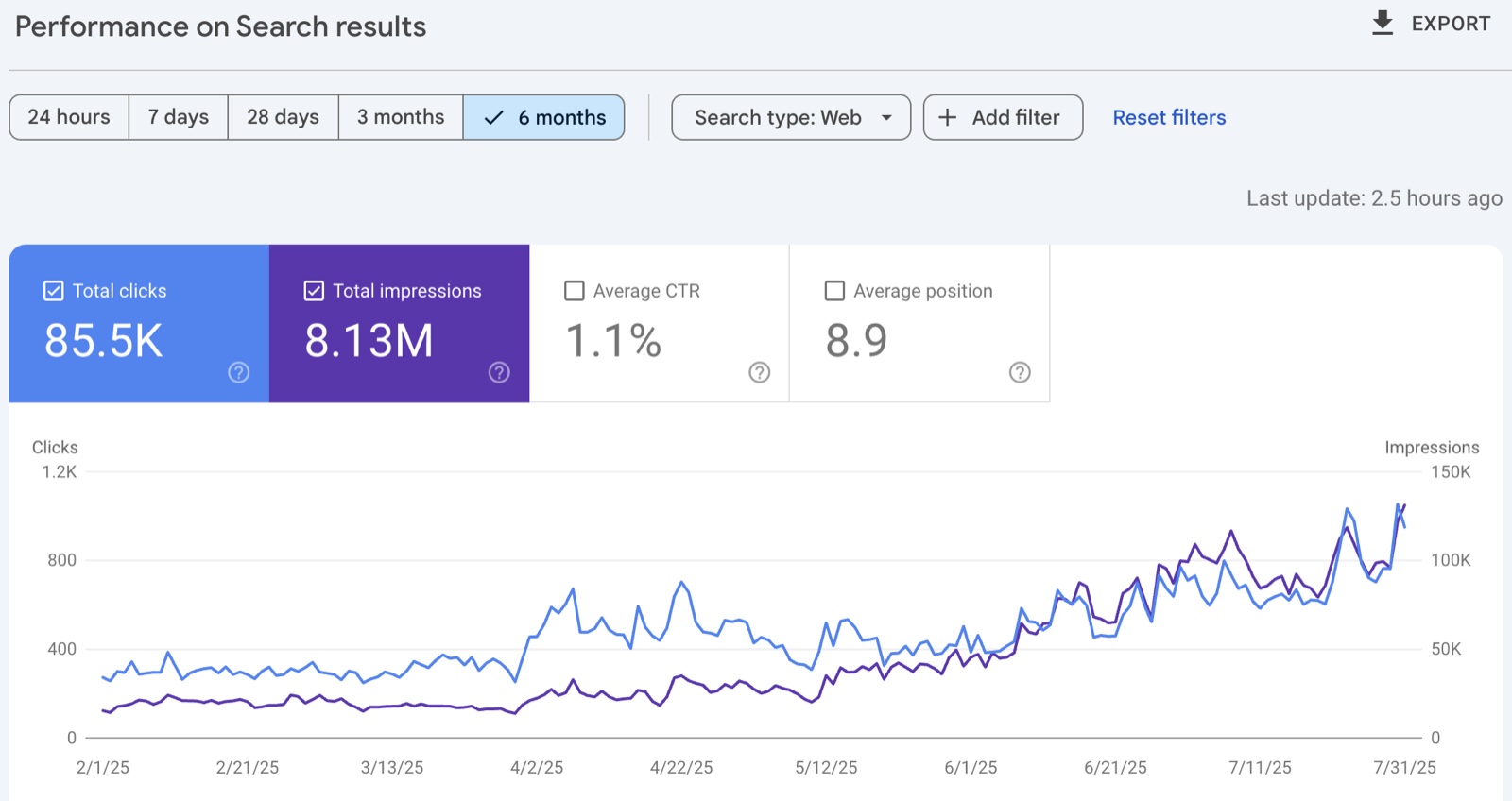 Ecommerce & retail · Dubai, UAEGold and jewellery retailer, Dubai+93% Organic traffic in 6 months5x Search impressions
The direct match: a Dubai retailer, verified in Search Console. It sold through forms, WhatsApp and calls, so the 4x conversions are enquiries and not checkout orders.
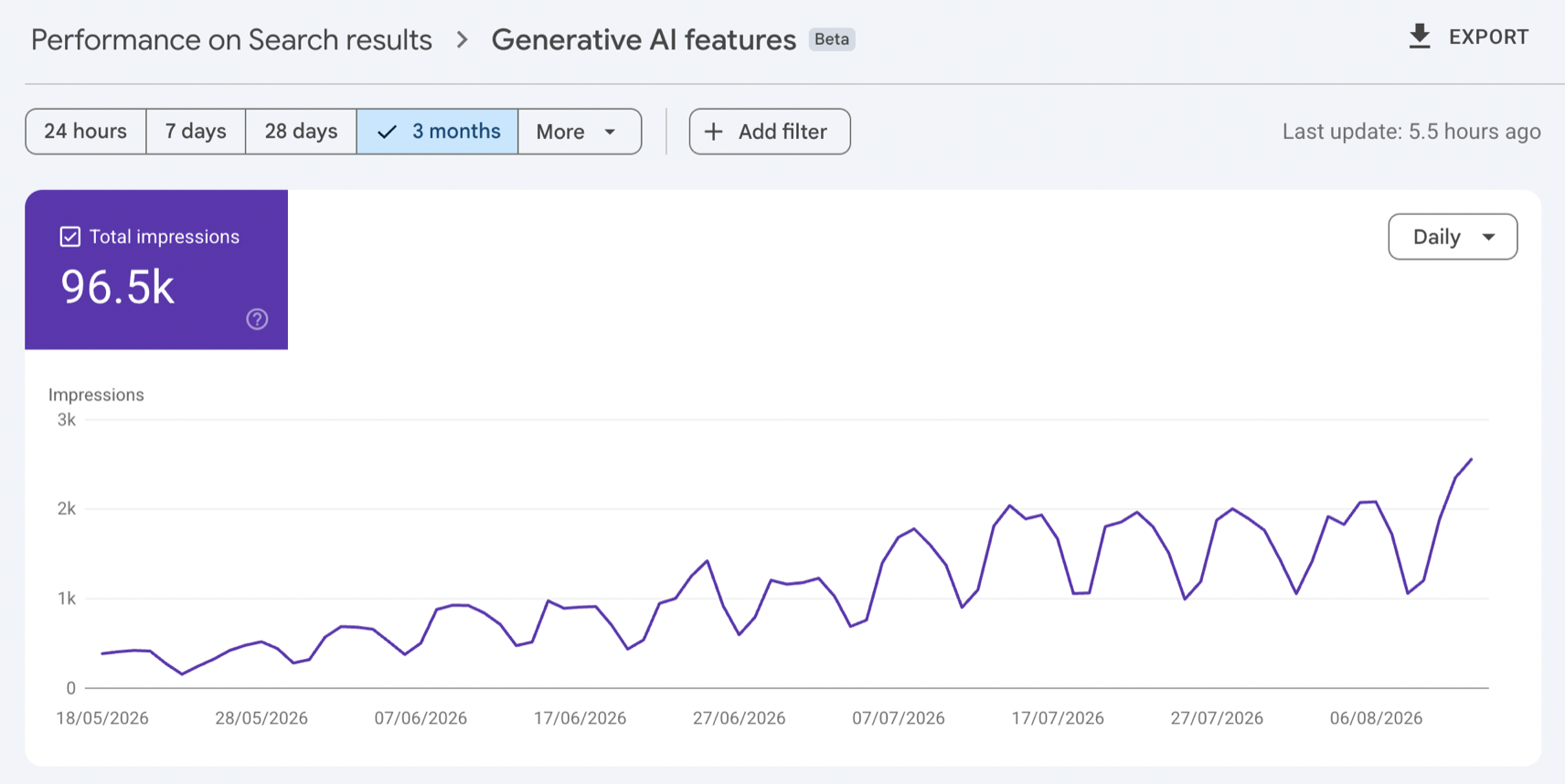 SaaS · Germany / EUNew B2B SaaS, Germany and EU2,000+ Organic clicks per month100K GenAI impressions in GSC
Not a store, and not in the UAE. It is here for the method: answer-first pages and PR earned visibility in AI answers on a domain with no history.
It shows how category depth and tighter crawling played out for a marketplace competitor.
It shows the plan when Arabic search is the largest opening.
Traditional ecommerce SEO vs SEO plus AI search optimisation
Traditional SEO earns a place on the results page. Adding AI search work earns a mention inside the answer as well. The technical base is the same, so the second builds on the first and does not replace it.
| Traditional ecommerce SEO | SEO plus AI search optimisation | |
|---|---|---|
| Goal | Rank categories and products in Google | Rank, and be named in AI shopping answers |
| Page format | Category copy and product detail | The same, opening with a direct answer and extractable facts |
| Off-site work | Links from relevant sites | Links, plus mentions on the sources each engine cites |
| Product data | Schema and feeds for rich results | The same data, kept identical across site, listings and profiles |
| Crawling | Googlebot and crawl budget | Googlebot, plus access for AI search crawlers |
| Reporting | Rankings, clicks, organic orders | Those, plus share of voice, citations and answer accuracy |
What to ask before hiring an ecommerce SEO company in Dubai
The best ecommerce SEO agency for you is one that can show how it handles a catalogue like yours and reports on orders. We do not publish a list of top ecommerce SEO companies, because we could not judge our competitors fairly. Use these tests on anyone you speak to, including us.
A quick checklist
- Proof is labelled by sector and market, with its source shown.
- Reports tie organic traffic to orders or revenue by category.
- They can explain filter handling on your own store, not in general.
- Arabic is planned from Arabic research, not added as a translation.
- AI visibility is measured on a fixed prompt set you can inspect.
- You know who does the work, whether it is a large ecommerce SEO firm or a founder-led team.
Questions to put to them
- Which of our filter pages would you keep indexed, and why?
- What would you do with our sold-out and discontinued products?
- How would you prepare for White Friday from where we stand today?
- Which sources do AI engines cite in our category right now?
- What would make you tell us that SEO is the wrong investment?
How does an ecommerce SEO agency scope a store?
We scope after a free audit and do not publish prices, because the work depends on your catalogue more than your revenue. You get a written plan and a quote before committing.
- Catalogue size, and how many filter combinations it produces.
- Whether English, Arabic or both need building.
- How much your platform and developers can change, and how quickly.
- How far away your next trading peak is.
- Whether physical showrooms need local SEO too.
There are no lock-in contracts, and you work directly with the founder. If most of your sales come through a marketplace storefront and you have no plan to build a direct brand, we will say so, because SEO on your own site may not repay the cost yet.
Questions store owners ask us
We quote after a free audit and do not publish prices. A boutique store with one language needs far less template and data work than a multi-category retailer in English and Arabic. The quote reflects both, plus what your own team can take on.
No, and nobody honestly can. Answers change by engine, wording and day. We can make your store easier to read and better supported by other sites, then show you how often it is named across a fixed set of shopper prompts each month.
Neither is a ticket in. Google says AI Overviews need no special file or markup beyond normal eligibility for Search. Product schema still matters because it gives Google accurate price, stock, shipping and returns data, and that helps your store across results.
Often yes, if you want repeat customers and better margin on some ranges. Marketplaces bring reach but keep the customer relationship. Avoid copying your marketplace listings onto your own site, and give your own pages detail, advice and exclusives that a listing cannot carry.
Crawl and data fixes can show within weeks, while category pages usually need several months to build steady orders. Timing also depends on your next trading peak and your competition. We report orders by category each month, so you can see movement before the full effect arrives.
UAE market knowledge matters more than distance. Most of the work happens in your platform, your data and your reports, so it can run remotely. We are based at Dubai Media City.
Usually not across the whole catalogue. We research Arabic demand by category, build templates that are ready for it, and start where demand and margin are strongest. Arabic pages should be written for Arabic searchers rather than machine-translated, so we expand as orders justify the cost.
Find out why shoppers and AI assistants skip your store
Send us your store and your three most important categories. We will review your filters, product data and how AI engines describe you, then send a prioritised plan.
Email raaquib@goupseo.agency · Dubai Media City, Dubai, UAE