Magento SEO Agency in Dubai, Plus WooCommerce and BigCommerce
GoupSEO is a Magento SEO agency in Dubai that also works on WooCommerce and BigCommerce stores. Our Magento SEO services tackle layered navigation, indexing, speed and Arabic store views, so large catalogues can be crawled properly and stay readable to Google and to ChatGPT, Claude, Perplexity and Google AI Overviews.
Google-Certified SEO Consultant · 7+ years
No lock-in contracts · Work directly with the founder · Response within 24 hours
Key takeaways
- These three platforms fail in different ways: Magento through scale and configuration, WooCommerce through plugins and hosting, and BigCommerce through fixed platform conventions.
- Layered navigation can produce far more URLs than you have products. Clear rules for what gets indexed come before any content work.
- Prices and stock must be consistent across page, markup and feed, because search systems and shoppers compare them.
- No one can guarantee that an AI engine cites your store. We test what crawlers can read and track mentions over time.
- None of our sources names one of these platforms. Our closest verified proof is technical work for a global manufacturer and a Dubai retail result.
Why do Magento, WooCommerce and BigCommerce need different SEO?
Each platform generates URLs, filters, markup and page speed problems in its own way, so the same advice does not transfer. Magento needs configuration and indexing discipline at scale, WooCommerce needs control over plugins and hosting, and BigCommerce needs work within its conventions. All three need clean product data for search and AI.
What UAE catalogues add to the job
Regional stores tend to run more complicated setups than the textbook examples.
Arabic store views and RTL
Magento store views, WooCommerce translation plugins and BigCommerce storefront setups each output Arabic differently. We check URLs, hreflang and metadata in the rendered HTML, not just in the admin panel.
Multi-country selling
A UAE retailer selling into Saudi Arabia or Kuwait may run separate stores or currencies. We decide which versions should be indexed and how they relate, to stop them competing with each other.
Older installs are common
Long-running stores often carry old extensions, redirect chains and past migrations. An audit usually finds crawl waste from systems nobody remembers adding, and clearing it is often the best early win.
ERP and feed sync issues
Prices and stock frequently come from an ERP. When sync lags, page, markup and feed can disagree. We set rules so that what you show customers stays consistent wherever it appears.
Keeping your catalogue readable to ChatGPT, Claude, Perplexity and Google's AI features
Shoppers use ChatGPT, Claude, Perplexity and Google AI Overviews to compare products and find sellers. Large stores risk being unreadable to these systems because of heavy scripts, blocked paths or inconsistent data. A catalogue that is simple to crawl and clearly described stands a better chance of being mentioned.
Catalogue prompts we test
- SpecificationWhich UAE sellers stock M12 stainless steel bolts in bulk with a data sheet?
- AvailabilityWhere can I buy this Bosch drill in Dubai with a local warranty and next-day delivery?
- CompatibilityWhich printer cartridges work with this HP model, and who sells them in the UAE?
- Store choiceWhat is a reliable online store in the UAE for commercial kitchen equipment?
Example prompts, written by us to show the pattern. They are not measured usage data.
How we make a large catalogue easier to cite
Consistent store and product facts
Attributes, warranty, delivery and return details match across product pages, policy pages, feeds and marketplace listings.
Product schema by template
Offer, shipping and return markup output by your platform. We remove duplicates left by extensions or plugins, and match each field to the page.
Answer-first category copy
A short block on what the range covers and how to choose, placed so it does not push products too far down on a phone.
Cited-source mapping
We record the sites behind each prompt, from trade directories to review sites and forums, and turn this into a target list for each main category.
Listings, PR and forum presence
Manufacturer dealer lists, trade directories, review platforms, industry publications and useful answers on Reddit or forums where your buyers already ask.
Crawler access on heavy stacks
We test OAI-SearchBot, Claude-SearchBot, PerplexityBot and Googlebot against your firewall, CDN and robots rules, and we check that prices load without scripts where possible.
Monthly catalogue tracking
A prompt set for your main categories, tracking mentions, the pages cited and errors such as an old price or a discontinued product.
A ranking needs a good page. A citation also needs a readable one
Search engines can spend effort rendering a heavy store, and rankings may still come. We do not assume every AI crawler will do the same, so plain HTML matters more for that second goal. Ranking also rewards links and category depth, while citations reward clear facts repeated by other sites. Your store needs both, because each reaches a different shopper moment.
Limits we are upfront about
We can't guarantee a citation for any catalogue, and answers vary from one session to the next. Google says no special files or schema are required for its AI features. We report crawl results, mentions and organic revenue by category, and we tell you when a fix did not change anything.
| Category prompt | ChatGPT | Claude | Perplexity | AI Overviews |
|---|---|---|---|---|
| Fixings, bulk | Store A named | Not named | Store A cited | Store B cited |
| Power tools, warranty | Not named | Store B named | Store B cited | Not shown |
| Kitchen equipment | Store B named | Not named | Not named | Store A cited |
Crawler and AI feature references: OpenAI: crawlers (2026); Anthropic: crawlers (2026); Perplexity: crawlers (2026); Google: AI features and your website (2025).
Magento SEO services
As a Magento SEO company we focus on configuration and scale first, since content cannot help pages that are never crawled. WooCommerce and BigCommerce have their own sections below.
Layered navigation rules
Decide which attribute filters are indexed, block the rest, and keep filtered pages out of internal links where needed.
Technical SEOStore views and hreflang
Separate Arabic and English store views, with correct hreflang, base URLs and metadata.
Technical SEOSpeed and caching
Full-page cache, Varnish or Hyvä-related checks, heavy extensions and Core Web Vitals on catalogue templates.
AI SEOIndexing and URL clean-up
Fix URL rewrites, category-path duplicates, sitemap bloat and redirect chains from past migrations.
GEOAttribute-driven content
Use attributes to generate useful category and product detail, then edit by hand where it matters most.
LLM SEOCatalogue facts and citations
A single approach to product facts, and outreach to the sources AI engines cite for your categories.
WooCommerce SEO services
A WooCommerce SEO agency needs to work as much on WordPress hosting and plugins as on store pages. WooCommerce gives you a lot of freedom, and that freedom is where most problems come from.
Plugin audit
Identify which plugins add scripts, duplicate schema or SEO conflicts, then remove or replace them with care.
Hosting and database
Slow queries, large order tables and shared hosting often limit speed, particularly on larger catalogues.
Attribute and tag pages
Decide which product tags, attribute archives and filtered URLs should exist and be indexed.
Arabic through translation plugins
Check how your plugin outputs Arabic URLs, hreflang and metadata, and correct any gaps.
BigCommerce SEO services
A BigCommerce SEO agency works within a hosted platform: less to maintain, and a few things you cannot change freely. The focus shifts to theme, faceted search and content.
Stencil theme review
Check theme speed, heading structure, image handling and default schema in your Stencil theme.
Faceted search control
Decide how filtered result pages are handled, so crawlers spend their time on products and main categories.
URL and redirect setup
Choose sensible URL patterns early, and manage redirects carefully during catalogue changes or migrations.
Multi-storefront and regions
Review how multiple storefronts or regions share content and how each is signalled to search engines.
Ninety days by platform
The order is broadly the same: crawl, rules, then content. What happens in each stage depends on your platform.
Days 1 to 30
Crawl and config audit
- Crawl the catalogue and review log samples.
- Magento: audit layered navigation and store views.
- WooCommerce: audit plugins, hosting and tag archives.
- BigCommerce: audit theme, facets and URL patterns.
Days 31 to 60
Rules and speed
- Apply index rules for filters and parameters.
- Remove duplicate schema and fix sitemaps.
- Improve speed on category and product templates.
- Test Arabic output as crawlers receive it.
Days 61 to 90
Content and visibility
- Rewrite priority category pages.
- Align product data across page, feed and ERP.
- Run the first AI prompt log.
- Report organic revenue by category.
Timing, honestly. Crawl improvements on a very large store take time to appear, because search engines recrawl gradually. Expect rankings on key categories to take months. Platform upgrades or planned migrations may change the order, so tell us about them at the start.
Technical proof from large catalogues and clean-ups
No source names Magento, WooCommerce or BigCommerce as the platform, so none of these is a platform-specific result. Below are two verified results from our founder's record, and two retail case studies.
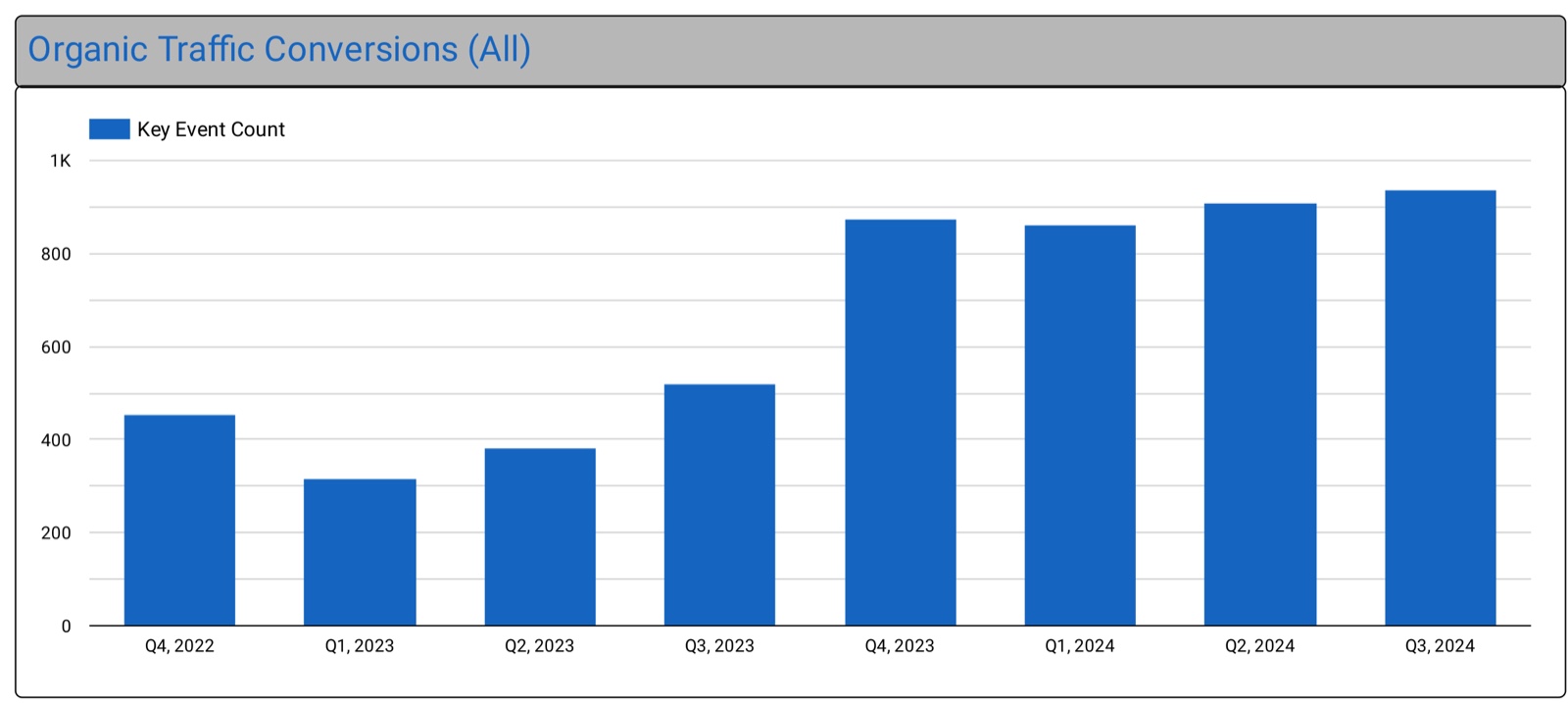 Manufacturing · Multi-regionGlobal manufacturing brand5K → 45K Organic traffic (9x growth)38% Lead over nearest competitor
Verified on a large multi-region site, with no platform named. It is relevant for structure and scale, not store checkout.
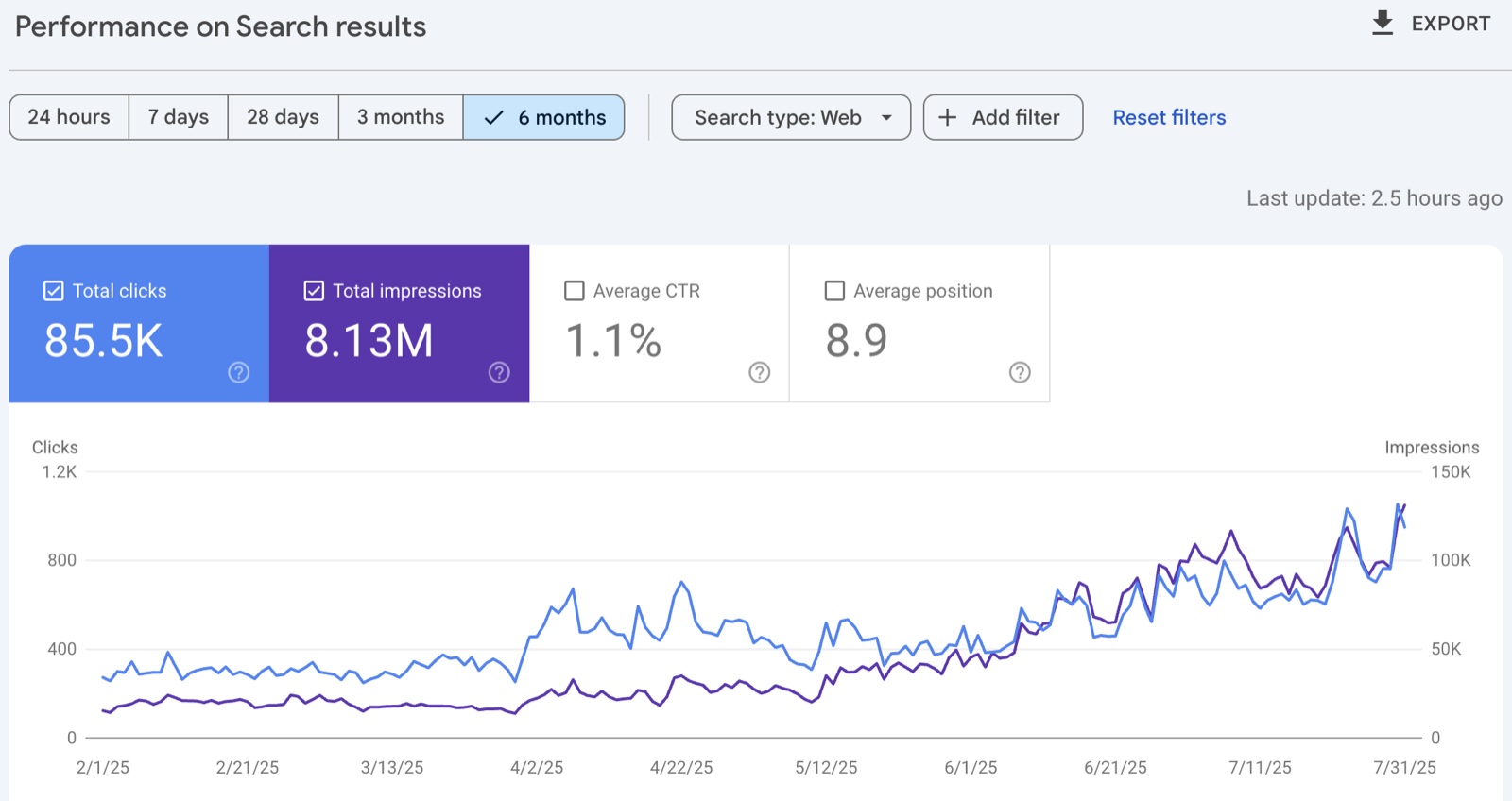 Ecommerce & retail · Dubai, UAEGold and jewellery retailer, Dubai+93% Organic traffic in 6 months5x Search impressions
A verified Dubai retailer, platform not stated. It is relevant to category and intent work, with enquiries through forms, WhatsApp and calls.
No platform is specified. It shows the plan for a spec-heavy catalogue with many attributes.
No platform is specified. It shows category and showroom work in a large range.
Platform default settings vs a specialist agency
Default settings get a store online, but they are not written around your catalogue. A specialist decides what should be indexed, tests how pages render and maintains consistent product data as the store changes.
| Default settings | Specialist agency | |
|---|---|---|
| Filter pages | Often crawlable by default | Rules set for each attribute |
| Schema | Basic, sometimes duplicated by extensions | One clean version tied to the page |
| Arabic | Depends on your plugin or setup | Tested in rendered HTML |
| Speed | Varies with theme and hosting | Measured and improved by template |
| AI readiness | Not considered | Crawler tests and mention tracking |
Questions to ask a Magento SEO company or WooCommerce SEO agency
Ask for platform-specific answers. A WooCommerce SEO company should discuss plugins and hosting, while a Magento partner should discuss store views and layered navigation. A BigCommerce SEO company should know what its platform restricts. We do not rate other agencies, so test each one with these.
Good signs
- They ask for your version, theme and extension list.
- They can tell you what your platform will not allow.
- They test changes on staging before release.
- They read log files for larger catalogues.
- They work well with your developers and ERP owner.
- They report by category, not just overall traffic.
Questions to put to them
- Which of our filters should be indexed, and how will you control that?
- What would you do with our old extensions or plugins?
- How would you keep ERP prices, feed and markup in step?
- How would an upgrade or migration change this plan?
- How will you test what AI crawlers can read?
Scoping by catalogue size
We scope after a free audit and publish no prices. Catalogue size is the starting point, then platform version, languages, the number of stores and how much development support you have.
- Number of products, categories and filters.
- Platform, version and level of customisation.
- Store views, languages and countries.
- ERP, feed and integration complexity.
- Who makes the changes: your team or a partner.
There are no lock-in contracts, and the founder leads the work. We do not push replatforming. If your platform genuinely limits you, we will show the evidence, and we will also show the risk that comes with moving.
Platform-specific questions
We quote after a free audit and publish no prices. Catalogue size, version, customisation and the number of store views matter most. A review of a small WooCommerce or BigCommerce store is usually a much smaller job than a large Magento install.
Often yes, but it depends on your firewall, robots rules and how much content loads through scripts. We test it directly and fix what blocks access. Being readable does not guarantee a citation, though it removes one common reason a store gets missed.
Schema is not a direct route in, and Google says no special markup is needed for its AI features. Accurate product data is still worth doing, because it supports product results and helps Google verify prices and stock. We treat it as a foundation.
Decide which filters have real search demand, and let only those be indexed. Control the rest with robots rules, canonicals or JavaScript links, as appropriate. Google notes that robots.txt is usually the stronger control for filtered URLs you do not need in search.
It can be, but hosting, database performance and plugin choices matter a great deal. Many problems come from setup, not WooCommerce itself. We review performance under your real catalogue before suggesting any bigger changes, because replatforming is expensive and carries real traffic risk.
As a hosted platform, BigCommerce manages some server-level behaviour for you, so certain things are less flexible than on a self-hosted store. Your theme, content, redirects and much of your URL setup are still yours to manage. We check your plan and storefront first.
Rarely for SEO alone. Migrations risk losing rankings, so the case needs to rest on business needs as well. We first show what could be fixed where you are. If a move still makes sense, we plan redirects and testing from the very beginning.
Find out how much of your catalogue is really being crawled
Tell us your platform, version and rough catalogue size. We will review your filters, indexing and speed, then test what AI crawlers can read.
Email raaquib@goupseo.agency · Dubai Media City, Dubai, UAE